CardLink
Details
Usability Testing & UI Redesign for the DocMorris NFC Prescription Flow
Categories
UX Research & Design
Healthcare
Date
Client
DocMorris
Project Overview & Responsibilities
Project Overview
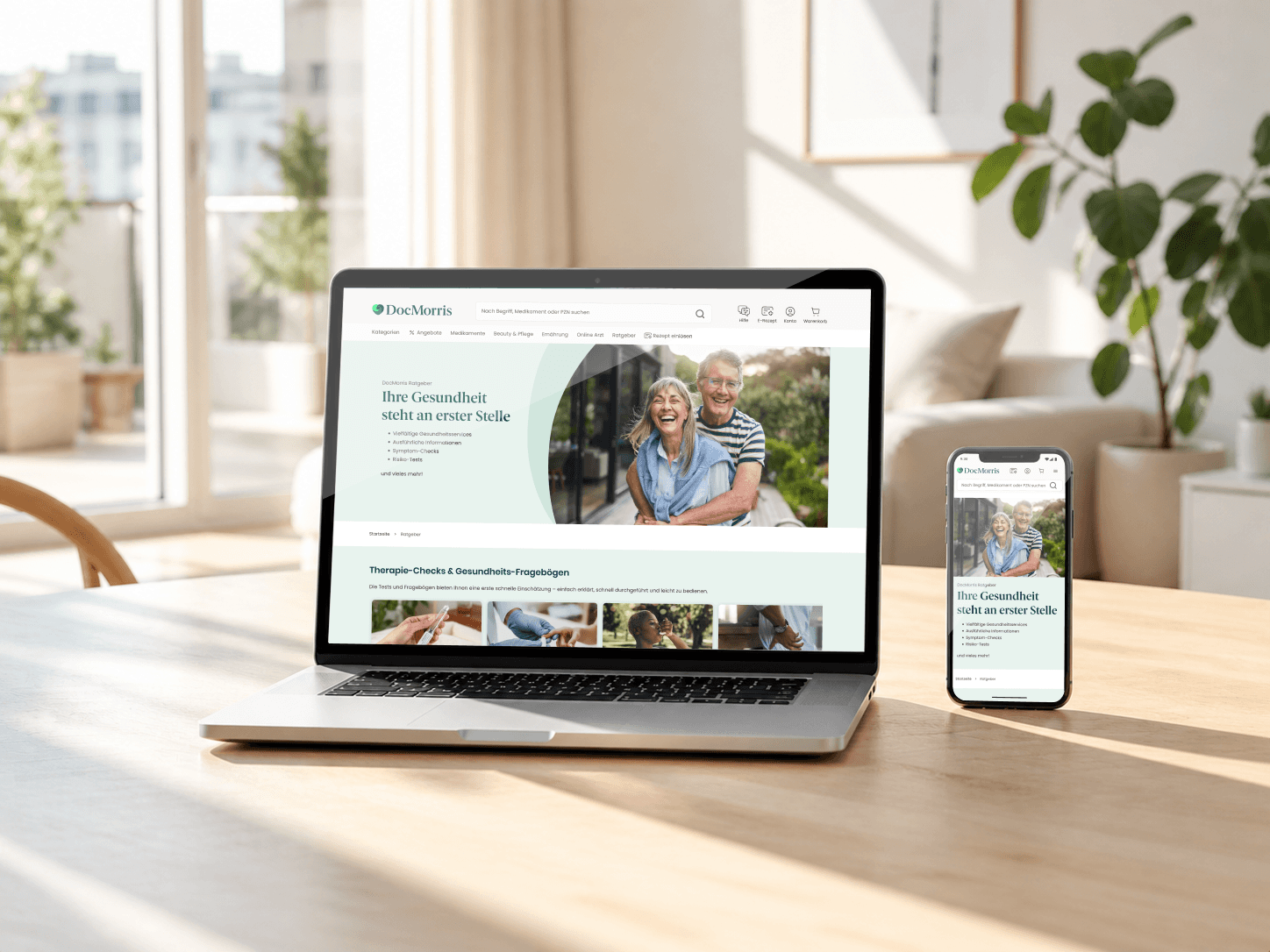
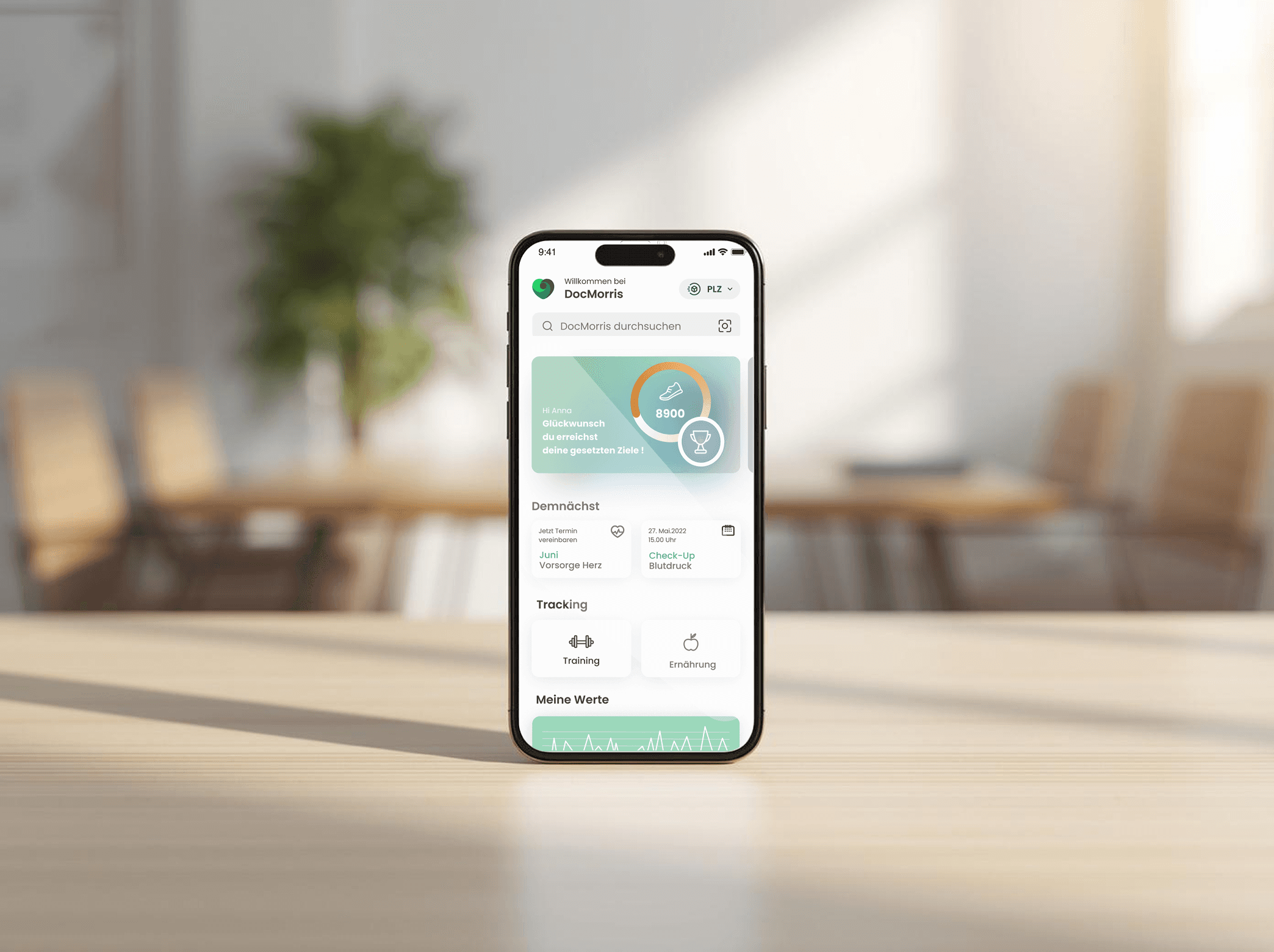
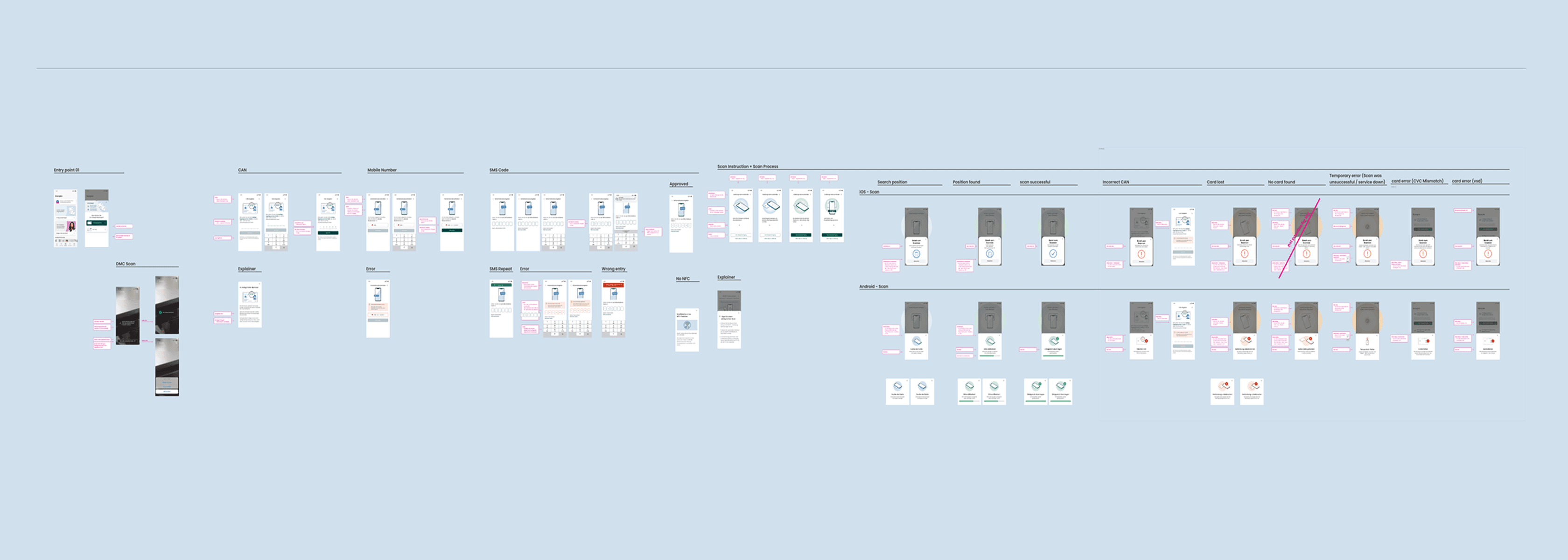
DocMorris was the first online pharmacy in Germany to be approved by Gematik for NFC-based prescription redemption via electronic health insurance card (eGK) using the CardLink process. After the initial go-live, analytics and customer feedback indicated usability issues—especially among older and less digitally experienced users. My task was to research, test, and redesign the complete CardLink flow to make the registration and redemption process more intuitive, secure, and accessible.
My Role & Responsibilities
Planned and moderated a usability study with 12 participants (48–72 years, diverse technical backgrounds, iOS & Android)
Conducted qualitative user interviews and task-based tests before and after launch
Analyzed behavioral patterns, confusion triggers, and key drop-off points
Redesigned UI flow, microinteractions, and instructional animations for better guidance
Created wireframes, user journeys, and high-fidelity designs in Figma
Collaborated closely with Product, Engineering, Data Security, and Compliance
Ensured GDPR and BSI TR-03161–compliant implementation
Presented findings and recommendations in management reviews and team workshops
Challenges & Approach
Challenge | Approach & Solution |
|---|---|
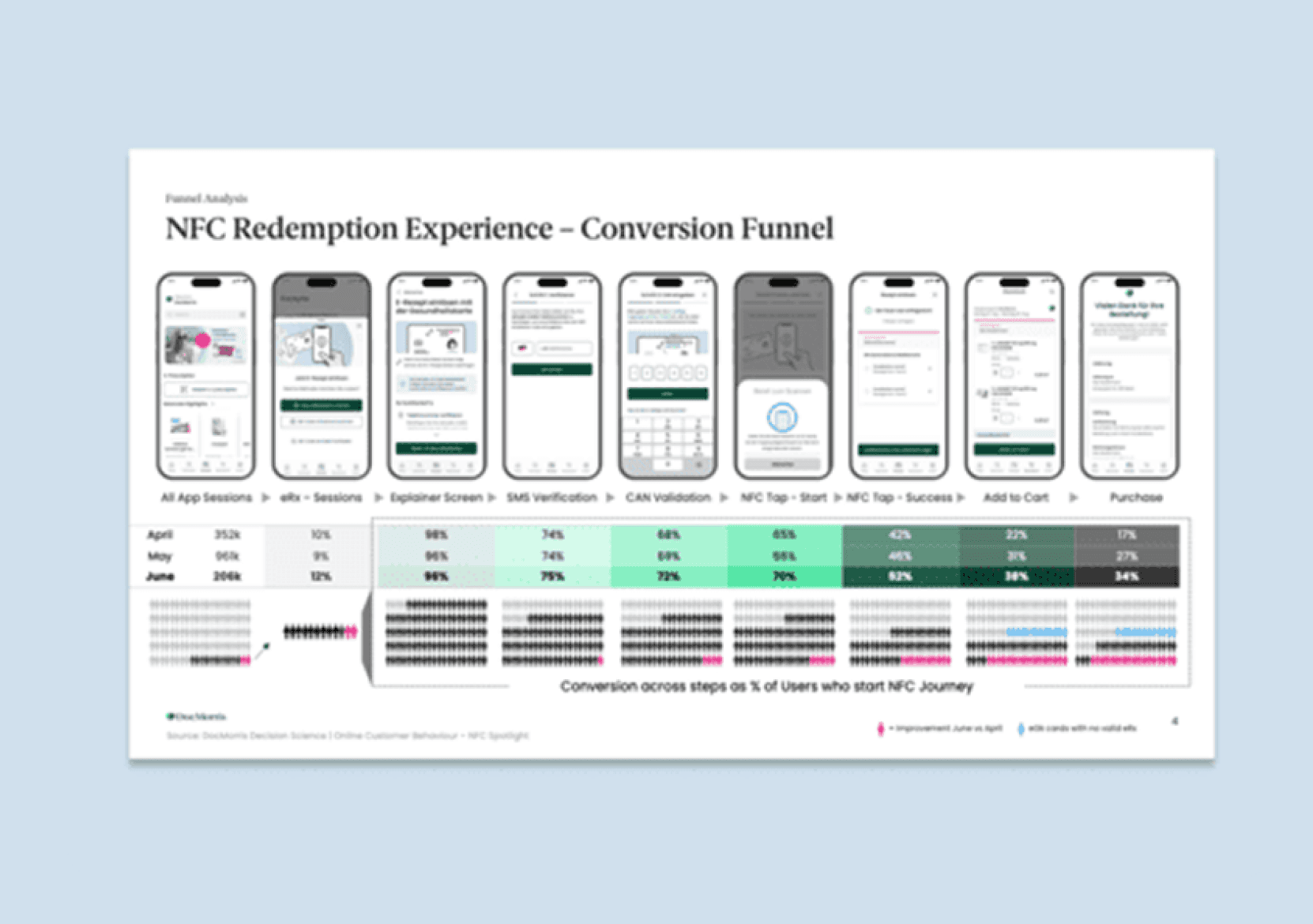
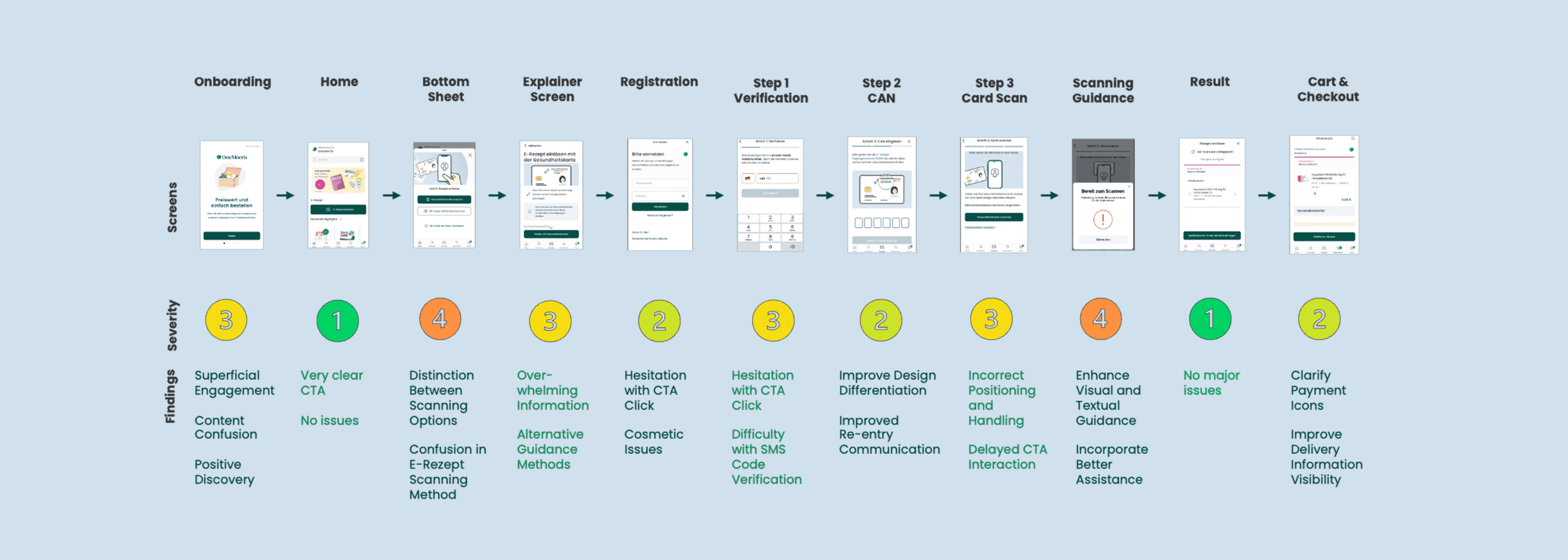
A complex, multi-step verification process (SMS code, CAN entry, NFC authentication) overwhelmed many users | Mapped friction points through usability testing and analytics; created simplified step-by-step guidance, improved language clarity, and added visual microinteractions. |
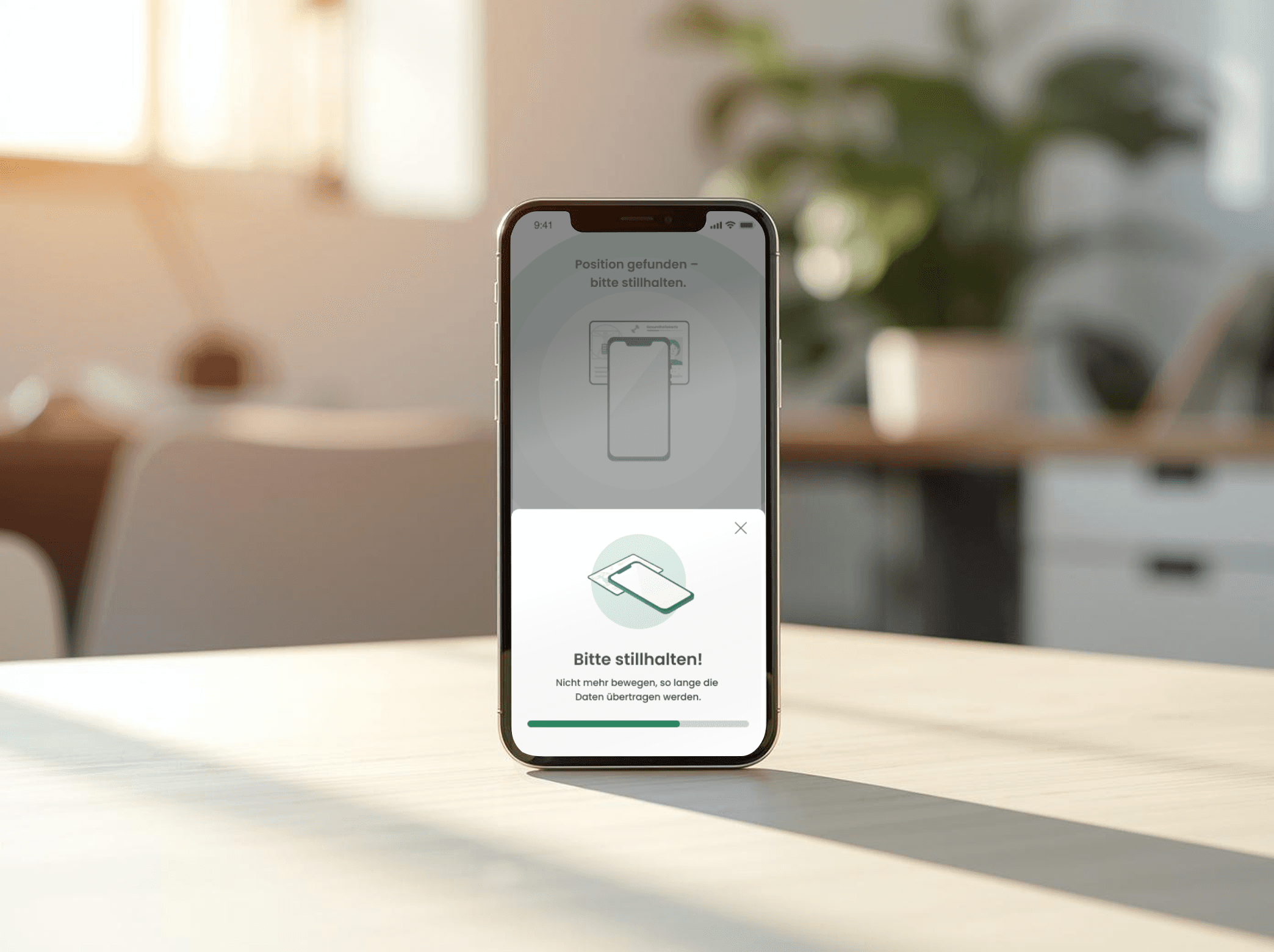
High drop-off rates during NFC scanning. | Developed and tested a short animation tutorial demonstrating correct device–card positioning and expected feedback. |
Balancing security regulations with UX clarity. | Collaborated closely with Security and Legal to design compliant yet user-friendly flows. |
Tools & Methods
Area | Tools/Method |
|---|---|
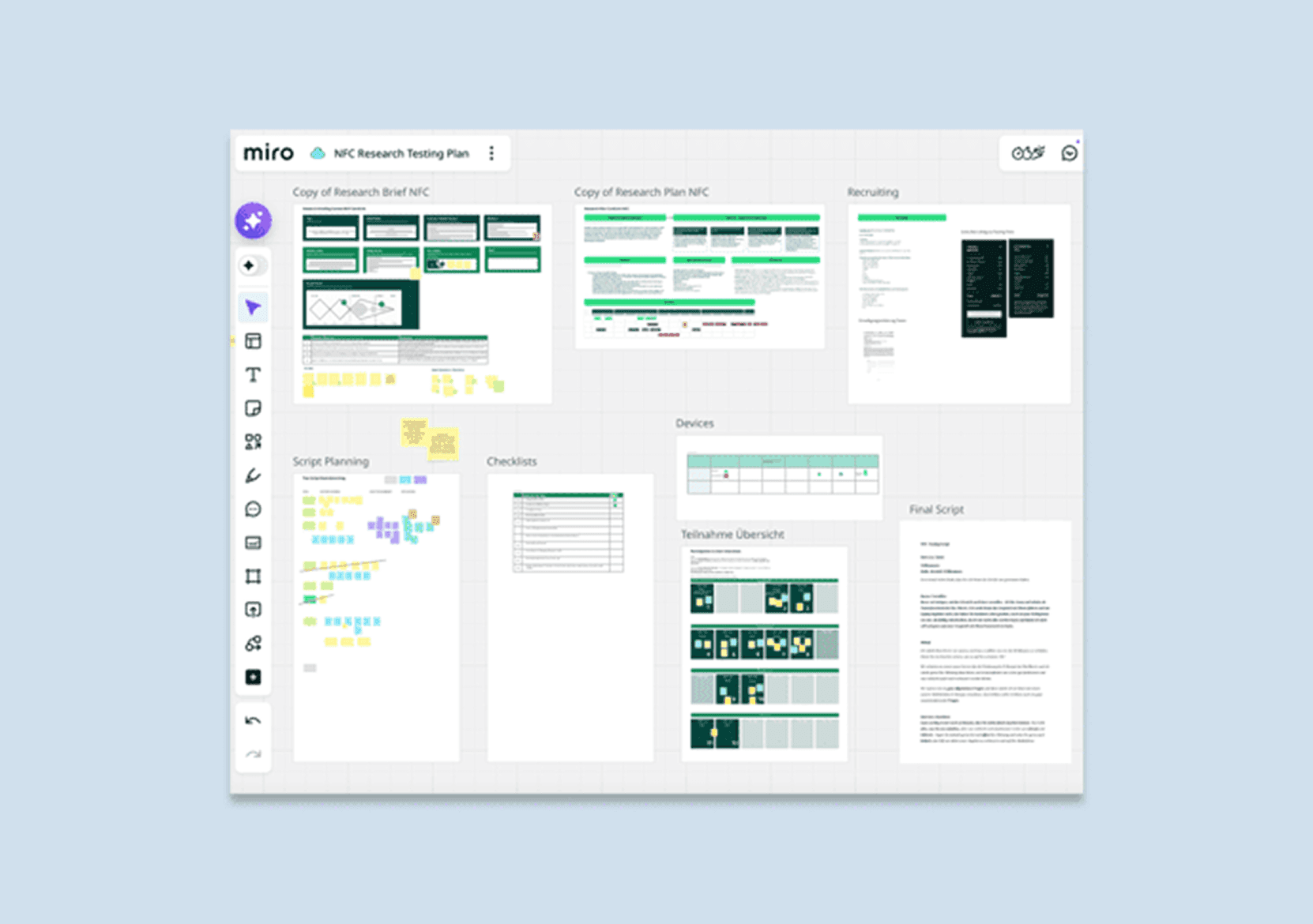
UX Research | Miro for research planning & synthesis, guided interviews, usability testing, Jobs-to-Be-Done, path analysis |
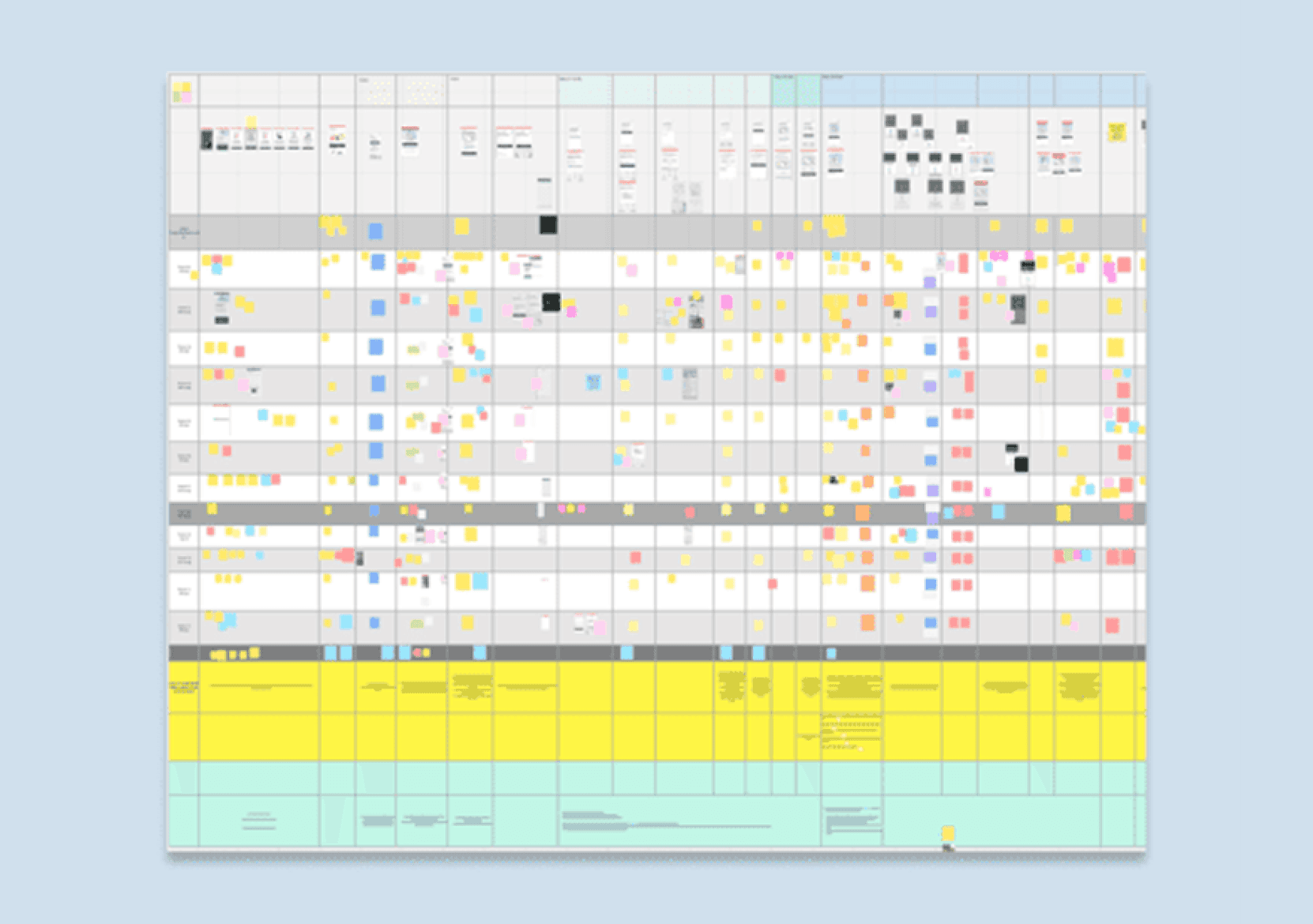
Synthesis & Ideation | Affinity mapping, co-creation workshops, How-Might-We facilitation, insight clustering |
UX/ UI Design | High-fidelity designs in Figma with structured developer handoff, user journeys, wireframes, interactive prototypes, clickdummies, microinteractions, and Lottie-based animations |
Agile Collaboration | JIRA, Confluence, Sprint Planning, Review Sessions |
Accessibility | WCAG 2.1, clear hierarchy, plain language |
Privacy & Compliance | GDPR, Privacy by Design, coordination with Legal & Security teams |
Documentation | Research Repository (Confluence), Reports & Presentations (PowerPoint, Miro) |
Outcome
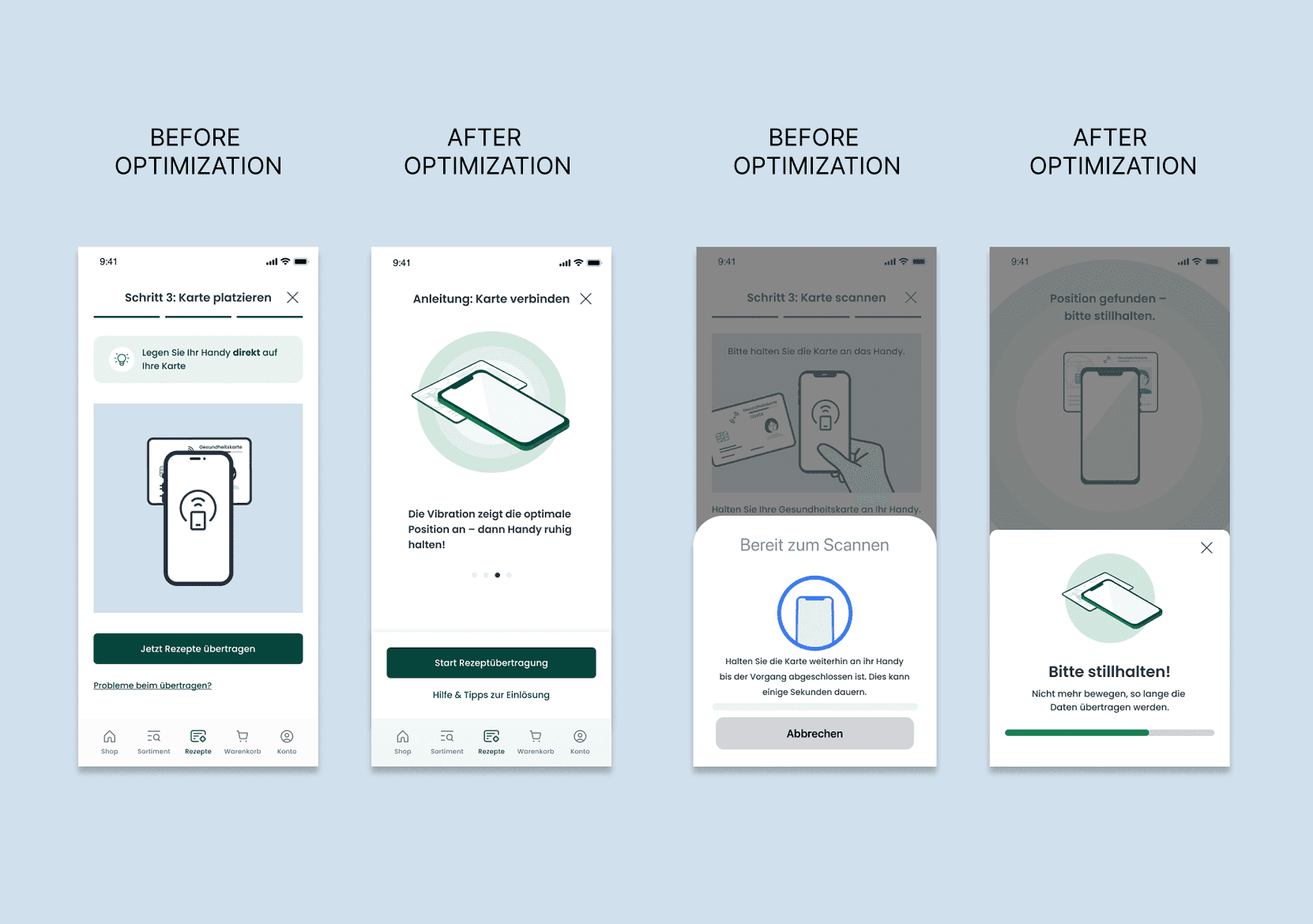
The usability test focused on ease of use, technical barriers, and satisfaction. Observations revealed that unclear instructions and missing visual feedback caused uncertainty and premature exits. Based on these findings, I introduced step-by-step guidance, simplified on-screen language, and a short animation tutorial that visually demonstrated the NFC scan process.
Outcome & Implemented Solutions
Clearer step-by-step NFC authentication flow
Simplified wording and improved error handling
Tutorial animation explaining the NFC scanning process
More accessible UI pattern for registration and verification
Business Impact
30% decrease in redemption drop-offs
Significant reduction in support tickets related to NFC prescription issues
Increased conversion for eRezept redemption
Higher satisfaction ratings on both iOS and Android
CardLink
Details
Usability Testing & UI Redesign for the DocMorris NFC Prescription Flow
Categories
UX Research & Design
Healthcare
Date
Client
DocMorris
Project Overview & Responsibilities
Project Overview
DocMorris was the first online pharmacy in Germany to be approved by Gematik for NFC-based prescription redemption via electronic health insurance card (eGK) using the CardLink process. After the initial go-live, analytics and customer feedback indicated usability issues—especially among older and less digitally experienced users. My task was to research, test, and redesign the complete CardLink flow to make the registration and redemption process more intuitive, secure, and accessible.
My Role & Responsibilities
Planned and moderated a usability study with 12 participants (48–72 years, diverse technical backgrounds, iOS & Android)
Conducted qualitative user interviews and task-based tests before and after launch
Analyzed behavioral patterns, confusion triggers, and key drop-off points
Redesigned UI flow, microinteractions, and instructional animations for better guidance
Created wireframes, user journeys, and high-fidelity designs in Figma
Collaborated closely with Product, Engineering, Data Security, and Compliance
Ensured GDPR and BSI TR-03161–compliant implementation
Presented findings and recommendations in management reviews and team workshops
Challenges & Approach
Challenge | Approach & Solution |
|---|---|
A complex, multi-step verification process (SMS code, CAN entry, NFC authentication) overwhelmed many users | Mapped friction points through usability testing and analytics; created simplified step-by-step guidance, improved language clarity, and added visual microinteractions. |
High drop-off rates during NFC scanning. | Developed and tested a short animation tutorial demonstrating correct device–card positioning and expected feedback. |
Balancing security regulations with UX clarity. | Collaborated closely with Security and Legal to design compliant yet user-friendly flows. |
Tools & Methods
Area | Tools/Method |
|---|---|
UX Research | Miro for research planning & synthesis, guided interviews, usability testing, Jobs-to-Be-Done, path analysis |
Synthesis & Ideation | Affinity mapping, co-creation workshops, How-Might-We facilitation, insight clustering |
UX/ UI Design | High-fidelity designs in Figma with structured developer handoff, user journeys, wireframes, interactive prototypes, clickdummies, microinteractions, and Lottie-based animations |
Agile Collaboration | JIRA, Confluence, Sprint Planning, Review Sessions |
Accessibility | WCAG 2.1, clear hierarchy, plain language |
Privacy & Compliance | GDPR, Privacy by Design, coordination with Legal & Security teams |
Documentation | Research Repository (Confluence), Reports & Presentations (PowerPoint, Miro) |
Outcome
The usability test focused on ease of use, technical barriers, and satisfaction. Observations revealed that unclear instructions and missing visual feedback caused uncertainty and premature exits. Based on these findings, I introduced step-by-step guidance, simplified on-screen language, and a short animation tutorial that visually demonstrated the NFC scan process.
Outcome & Implemented Solutions
Clearer step-by-step NFC authentication flow
Simplified wording and improved error handling
Tutorial animation explaining the NFC scanning process
More accessible UI pattern for registration and verification
Business Impact
30% decrease in redemption drop-offs
Significant reduction in support tickets related to NFC prescription issues
Increased conversion for eRezept redemption
Higher satisfaction ratings on both iOS and Android